
WHAT IS JAVA?
A language for object-oriented programming is Java. It is currently the most used computer programming language in the world and is used to create desktop and web apps. It is chosen for implementing Internet-based applications and software for devices, as well as for satisfying the corporate programming needs of many enterprises.
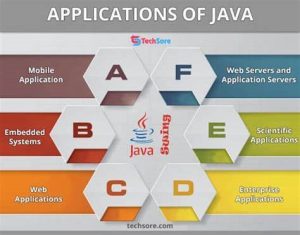
APPLICATIONS OF JAVA:
Standalone Application
Windows-based programmes are another name for desktop applications. These are conventional programmes that must be installed on each computer. antivirus software, media players, etc. Examples of standalone programmes that require Java for development include AWT and Swing.
Web Application
The web application generates a dynamic page while running server-side. For the creation of web applications in Java, several technologies call for the java programming language.
Enterprise Application
Distributed enterprise applications, such banking apps, are common. High-level security, load balancing, and clustering are just a few benefits.
Mobile Application
A mobile application is one that is made specifically for mobile devices. The platforms Android and Java ME currently meet the criteria for developing mobile applications.
Java Platforms / Editions
The following are the Java programming language’s supported platforms:
- Standard Version of the Java Platform (Java SE)
- Java Enterprise Edition Platform (Java EE)
- Java Micro Edition Platform (Java ME)
- J2EE FX
History of Java

James Gosling, referred to as the father of Java, created ava in 1995. James Gosling oversaw a group of researchers at Sun Microsystems who worked to develop a new programming language that would enable users to interact with products electronically.
Fun Fact: Java was formerly known as Oak. In 1989, James Gosling designed Oak, a programming language that ultimately changed its name to Java.
Features of Java :
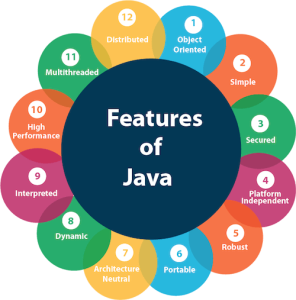
Open Source:
Since its inception, Java has been an open-source software with full public access. The GPL (General Public License), the licence that typically accompanies open-source software, gives programmers the freedom to post their whole source code for anyone to download, copy, and redistribute.
High Performance:
Because Java is an interpreted language rather than a compiled one like C or C++, it will never be as quick. But Java uses a just-in-time compiler to enable high performance.
Multi-Threading:
Programming many tasks at once is feasible because to Java’s multithreading functionality. The advantage of multithreading is that it runs numerous threads simultaneously while using the same memory and other resources, such as Grammar mistakes are checked as you type.
Secure:
Java is always the first option when it comes to security. With Java’s security capabilities, we can create systems that are free of viruses and malicious code. Java programmes are more secure because they always run in the Java runtime environment with essentially no OS interaction.
Platform independent:
Unlike other programming languages that are compiled into platform-specific machines, like C, C++, etc. Java is a language that is assuredly write-once, run-anywhere. Java programmes are converted into bytecode during compilation. This bytecode format also offers security, is platform-independent, and may run on any computer. Java programmes can be run on any machine that has the Java Runtime Environment.
Portability:
The Java code is extremely portable because to the cross-platform functionality. The same code that programmers write for Windows can also be run on Linux.
Object-Oriented:
Everything is an object with data and behaviour in Java. Java’s Object Model foundation makes it simple to extend.
Robust:
Java focuses mostly on compile-time error checking and runtime checking in an effort to get rid of error-prone routines. However by offering an autonomous garbage collector and exception handling, Java mostly enhanced memory management and improperly handled exceptions.
REFERENCE:
Java Tutorial | Java Programming Made Easy | Learn Java | Edureka
Yamuna
21VV1A1213
INFORMATION TECHNOLOGY