
Li-Fi : A New Era in Wireless Communication
Li-Fi, or Light Fidelity, is a new wireless communication technology that uses light instead of radio waves to transmit data. While still in its early stages, Li-Fi has the potential to revolutionize the way we communicate and connect to the internet. In this blog post, we’ll explore the basics of Li-Fi and its potential impact.
What is Li-Fi?
Li-Fi is a wireless communication technology that uses visible light, or sometimes infrared or ultraviolet light, to transmit data. The technology works by using LEDs to modulate light at high frequencies, which are then detected by a receiver to decode the information. Since visible light has a much higher frequency than radio waves, Li-Fi can transmit data at much higher speeds than traditional Wi-Fi.
Advantages of Li-Fi

One of the biggest advantages of Li-Fi is its speed. Li-Fi can transmit data at speeds up to 100 times faster than traditional Wi-Fi. This means that Li-Fi has the potential to revolutionize industries that rely on fast and reliable data transmission, such as healthcare, finance, and transportation.
Another advantage of Li-Fi is its
security. Since Li-Fi uses light instead of radio waves to transmit data, it is much more difficult to intercept and hack. This makes Li-Fi an attractive option for organizations that require secure communication channels, such as governments and financial institutions.
Difference between wifi and lifi
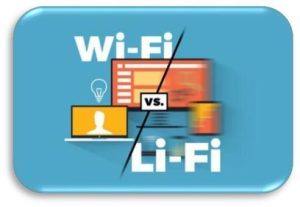
WiFi and Li-Fi are two different wireless communication technologies that use different parts of the electromagnetic spectrum to transmit data wirelessly. Here are the key differences between WiFi and Li-Fi.
Technology:
WiFi uses radio waves to transmit data wirelessly, while Li-Fi uses light waves to transmit data wirelessly.
Speed:
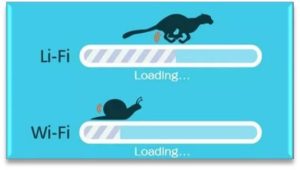
Li-Fi is much faster than WiFi. While WiFi speeds typically range from a few megabits per second to several hundred megabits per second, Li-Fi can achieve speeds of several gigabits per second.
Range:
WiFi has a longer range than Li-Fi. While WiFi signals can travel several hundred feet, Li-Fi signals are limited to the area where the light source is present.
Interference:
WiFi signals can be affected by interference from other electronic devices, such as microwaves and cordless phones. Li-Fi signals are less prone to interference since they use light waves.
Security:
Li-Fi is more secure than WiFi. Since Li-Fi signals cannot pass through walls, it is more difficult for hackers to intercept the data being transmitted.
Cost:
Currently, Li-Fi technology is more expensive than WiFi technology. While WiFi is a mature technology with a wide range of affordable devices, Li-Fi is still in the early stages of development.
In summary, while WiFi is a more established technology with a longer range and wider availability, Li-Fi offers the potential for much faster speeds and better security, especially in environments where data security is critical.
Challenges of Li-Fi
While Li-Fi has many advantages, there are also some challenges to overcome. One challenge is that Li-Fi requires a direct line of sight between the transmitter and receiver. This means that Li-Fi may not be suitable for applications where there are
obstacles or barriers between the transmitter and receiver.
Another challenge is that Li-Fi is still a relatively new and untested technology. As with any new technology, there may be unforeseen issues or limitations that arise as it is further developed and implemented.
Conclusion
Li-Fi is a new wireless communication technology that has the potential to revolutionize the way we connect to the internet and communicate with each other. With its high speed and enhanced security, Li-Fi has the potential to transform industries and improve the lives of people around the world. While there are still challenges to overcome, the future of Li-Fi looks bright and promising.