
Nature is the physical cosmos or world in its broadest sense. The term “nature” can be used to describe both universal life and the phenomena of the physical world. A significant, if not the only, component of science is the study of nature. Despite the fact that humans are a part of nature, human activity is frequently thought of as a distinct category from other natural occurrences.
Nature gives life to the planet. An unobservable, enigmatic force has the power to revitalise a setting. Its absence can cause the world to become serenely still. Its strength is barely visible on bare mountain summits, but it becomes obvious in forests and on the water.
Earth:-
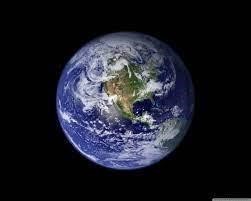
The natural world of Earth, the only planet known to support life, is the focus of numerous scientific disciplines. It is the largest terrestrial planet and the fifth largest planet overall in the Solar System, and it is third closest to the Sun. Its two sizable polar regions, two comparatively small temperate zones, and a sizable equatorial tropical to subtropical region are its most notable climatic characteristics. [7] Depending on the area, precipitation might range from several meters of water every year to less than a millimeter. Oceans with salt water cover 71% of the Earth’s surface. With the majority of the populated land located in the Northern Hemisphere, the remaining land is made up of continents and islands.
Atmosphere: –
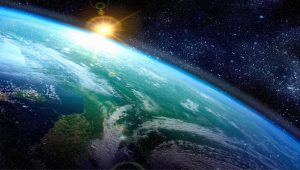
One important element in the ecosystem’s maintenance is the Earth’s atmosphere. Gravity keeps the thin gaseous layer that surrounds the Earth in place. With far lower amounts of carbon dioxide, argon, etc., the main components of air are nitrogen, oxygen, and water vapour. With height, the air pressure steadily decreases. The ultraviolet (UV) energy that reaches the surface is significantly reduced thanks to the ozone layer. UV light easily damages DNA; hence this protects life at the surface. Moreover, the atmosphere holds onto heat at night, lowering daily temperature extremes.
Whether:-
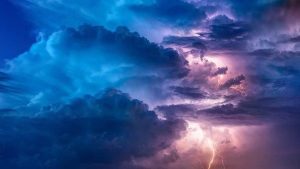
Both favorable and unfavorable effects of weather are possible. The destructive power of weather extremes like tornadoes, hurricanes, and cyclones can be felt for miles along their routes. Due to the dependence that surface vegetation has developed on seasonal weather variation, unexpected alterations that last only a few years can have a significant impact on both the vegetation and the animals that depend on its development for sustenance.
Climate:-
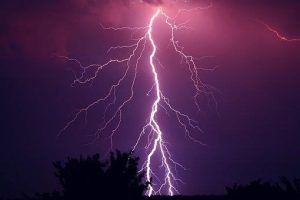
A region’s climate is influenced by a variety of variables, particularly latitude. A climate region is defined as a latitudinal stretch of the surface having comparable climatic characteristics. There are numerous such areas, from the equatorial tropical climate to the arctic climate at the northern and southernmost points. Seasons, which originate from the Earth’s axis’ tilt with respect to its orbital plane, have an impact on weather as well.
Importance of nature:-
Although though nature plays a big part in sustaining our existence, each element plays a particular part in keeping nature in balance. While nature provides us with food to eat, air to breathe, and water to drink, we also appreciate its beauty and noises since they are uplifting to our spirits. We are given countless resources by nature, and in return we overuse and damage the environment. Hence, as Earthlings, we must be aware of how our behavior affects the environment and how it interferes with its natural processes.
The primary villain responsible for harming nature is human activity. Before, the harmful impacts of human exploitation on nature were not readily apparent. When we consider that we have only removed one tree, which might not cause any harm to the environment, keep in mind that there are hundreds of people who share your opinion. As a result, one tree grows into hundreds, thousands, and millions. If we continue down this path, nature will soon run out of resources, and we will be plagued by a variety of diseases and natural disasters. Simply put, our whole life would be in danger. This is why it is important to protect nature. We look at a few strategies for interacting with nature in this essay on how to save nature.
Ways to save nature:-
First, we need to be aware that although if nature has limitless resources, if we use them irresponsibly, they can quickly run out. When more people moved into cities, more land was cleared and more forests were destroyed. Environmental threats, such as greenhouse gas emissions, global warming, the extinction of natural species of flora and wildlife, etc., are the result. And we’ll have to pay a hefty price for it.

Let’s adopt sustainable ways to safeguard the environment and prevent ourselves from natural disasters. We are doing a lot of good for our environment when we use eco-friendly products and throw away plastic and other non-biodegradable materials. Using public transportation, separating waste, and limiting the use of pesticides are further ways we can work together to prevent pollution
References
https://en.wikipedia.org/wiki/Nature -about-the-nature-importance-waystosavenature