POINTERS IN C
INTRODUCTION:
Pointers are one of the most powerful and challenging features of the C programming language. They allow us to manipulate and access memory directly,which can be both incredibly useful and incredibly dangerous. In this blog, we will explore the basics of pointers in C and some of the common pitfalls associated with their use.
What are pointers?
A pointer is a variable that stores the memory address of another variable. In other words, a pointer points to a location in memory where a value is stored rather than storing the actual location in memory where a value is stored rather than storing the actual value itself. Pointers can be used to access and modify data in memory directly, which can be useful in a variety of programming scenarios.
Declaring and using a pointer :
To declare a pointer in C, we use the * symbol before the variable name. For example, to declare a pointer to an integer, we would write:
int* p;
This declares a pointer called p that can point to an integer value. We can then use the & operator to assign the address of an integer variable to the pointer:
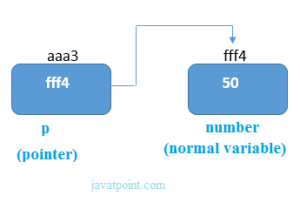
int number =50;
p=&number;
This sets the value of ptr to the address of the variable ‘number’. We can then use the *operator to access the value stored at the memory location pointed to by p:
printf(“The value of number is %d\n”, *p);
This will print “The value of number is 50” to the console.
Common pitfalls:
Pointers can be dificult to use correctly, and there are several common pitfalls associated with thei use. One common mistake is using an uninitialized pointer, which can lead tosegmentation faults or other memory-related errors. It’s important to always initialize pointers to a valid memory location before using them.
Another common mistake is dereferencing a null pointer, which can also lead to segmentation faults. It’s a good practice to always check whether a pointer is null before dereferencing it:
if (ptr!= NULL){
*ptr=20;
}
This code sets the value stored at the memory location pointed to by ptr to 20, but only if ptr is not null.
Conclusion:
Pointers are a powerful and challenging feature of the C programming language. They allow us to manipulate and access memory directly, but they also require careful use to avoid common pitfalls like uninitialized or null pointers. With practice and attention to detail, pointers can be an incredibly useful tool in your C programming arsenal.
Reference link:
https://www.tutorialspoint.com/cprogramming/c_pointers.htm
M.Manogna
22VV1A1239
Information Technology